
Source: CaribHR.Radio feed
A Fresh Compilation
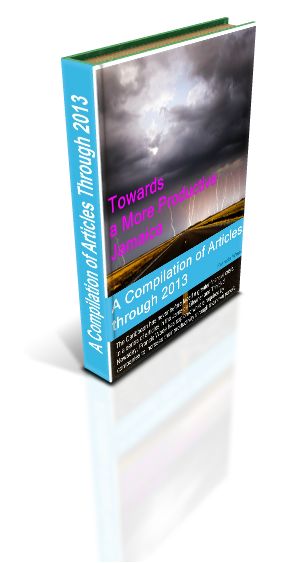
Now available – a compilation of my articles written for the Jamaica Gleaner. Click here to access your download and discover over 50 provocative articles written from 2010-2013.
How to Manage Your Time Like a CEO
There’s no right way or wrong way to manage your time, but there are lots of similarities between the ways that CEO’s and college students manage their time. Here’s a link to an article I wrote for the Sunday Gleaner on this topic.
CEO Interview – Stanley Smith – Dec 19,2013
Source: CaribHR.Radio feed
A New Article on Capturing
 I recently revised a time management special report on the topic of Capturing – the art of recording new demands on your time in a reliable place.
Most people in the Caribbean use memory – which is a recipe for disaster. Download this fre article and teach yourself the finer points.
How to Be So Good They Can’t Ignore You
This article is essentially a review of the book “So Good They Can’t Ignore You” by Cal Newport. It’s an important one – as it attacks the belief that passion is the essential ingredient in starting out in your own business.
How to Avoid the Planning Fallacy
It’s easy to make the mistake of being too optimistic at times when it’s simply unwarranted. This fault is called the “planning fallacy” and it follows a natural human trait to project the best case, even when the evidence suggests something quite different.
We Caribbean people are well known in the rest of the world for our casual, laid-back and fun-seeking dispositions. It’s a major part of our culture – perhaps a release from centuries of slavery and indentureship. People pay thousands of dollars to enjoy this vibe in our carnivals, attractions and tourist resorts.
As distinct as this culture might be, it has a drawback: we are culturally prone to be over-optimistic. The “planning fallacy” is the embodiment of this tendency: we leave San Fernando for a meeting in Diego Martin, estimating that the trip can take as little as an hour. While it’s true that, under ideal circumstances, it’s possible for such a miracle to happen, it’s a mistake to believe that it will in fact do so. It’s a greater folly to lead someone else to expect us to be there “in an hour” especially when our timely attendance is critical.
It’s the planning fallacy at work and it undermines projects throughout the world and in our region. Here’s how we get past it.
1. Use Past Data
We fool ourselves into thinking that this particular trip to town is different than the three we made last month, and therefore will take less time. After all, we argue, the conditions are different; prior obstacles are unlikely to recur. Plus, we have learned a few lessons that will make things better this time around.
The research shows, however, that past data is the best predictor. At the very least, we must look for anecdotal facts as a starting point, before making projections we fall in love with that are, in fact, just plain crazy.
To prevent this from happening, seek independent verification for task estimates. Ask someone else how long it takes the average person to make the trip, or complete the task. If someone is making you a promise, ask them how long a similar task took in the recent past. Listen carefully to both the words given in the answer and the tone of their voice. Then, make your own determination.
2. Ask for Unbiased Estimates
An unbiased estimate is simply one that has an even, 50-50 chance of taking place. For example, the odds of getting 10 Heads in a row when flipping the average coin 10 times are extremely small. Most trips each day from San Fernando to Diego Martin during daytime hours take almost 2 hours – it’s the rare, one-off trip that may take only an hour. Perhaps 1 out of 50.
When you ask your colleagues to make estimates, never take the first one offered. Instead, test it. Ask them “I hear you say 10 days, but do you mean 10 days plus or minus 2 or 3 days on either side, late or early?” If they demur and tell you that there’s no way the deliverable can be early, then you know that they are committing the planning fallacy. They may not know how to correct the estimate, but you must do so if you hope to walk away from the conversation with a realistic idea of how long the task will take.
3. Accept Negativity
In business, we have a tendency to over-value the person with a can-do attitude. The employee we prefer to work with is the one who bring us both problems and solutions, never gets depressed and infuses a team with energy. However, we go a step further and accuse those who are pessimistic of having negative attitudes – they aren’t “team-players.”
To escape the planning fallacy, however, we need to listen to the voices on both sides and accept those we don’t want to hear.
It’s a big mistake to tear down the person who expresses doubts as they are likely to be the ones who will save the project from its own hubris, and failure.
Unfortunately, this happens all the time, especially on the part of executives who “want what they want, when they want it.” The sad, failed implementation of the Obamacare website is a prime example. Middle managers did their best to keep those who knew it wouldn’t be ready on time as far away as possible from the executives who needed to know the facts. The failure speaks for itself.
Good project management is all about recognizing and mitigating risk, but our cultural habits actually increase risks. Trinidadian managers need to factor this tendency into their estimates to avoid making ruinous, unrealistic plans.
Published in the Trinidad Newsday
Closing the Gap Between Pretentious Public and Truthful Private Comments
Dysfunctional companies have one thing in common – there’s a big gap between what’s said in public versus private discussions: a difference that makes people crazy.
In this article, I talk about my work to help companies bring the two closer into alignment, and ways in which any company can use the same principles. Pretentious Public vs. Truthful Private Comments.
Interview with Commandant James Golding and Customer Service Speech – Nov 29,2013
Source: CaribHR.Radio feed
Interview with Barbara Emmanuel on Caribbean Leadership – Nov 13,2013
Source: CaribHR.Radio feed